Lake Harris and the Harris Chain support a diverse freshwater fish community. FWC highlights Florida bass, black crappie, bluegill, redear sunfish, sunshine bass, and channel catfish among the system’s popular sport fish, with many additional native and nonnative species documented in the chain.
This is a species guide, not a fishing report. Fish location, activity, water conditions, regulations, access, and management work can change. Check FWC’s current Harris Chain page, regulations, license requirements, and official notices before fishing.
Popular sport fish in the Harris Chain
Florida bass and largemouth bass
Black bass are a major reason anglers know the Harris Chain. FWC’s lake page uses Florida bass in its current forecast and links the system to the agency’s TrophyCatch conservation program. Because names and species classifications can change in scientific and agency materials, use FWC’s current identification and regulation pages rather than relying on an old chart.
Bass location and feeding behavior vary with water temperature, vegetation, structure, weather, water clarity, and time of day. FWC publishes lake-specific planning information and updates it more often than this evergreen guide should.
Black crappie
Black crappie, often called speckled perch in Florida, are an important recreational fish in Central Florida. FWC’s Fish and Wildlife Research Institute has studied Harris Chain crappie through angler surveys and biological sampling. Seasonal patterns and regulations should be checked through FWC before a trip.
Bluegill and redear sunfish
FWC groups bluegill and redear sunfish, or shellcracker, among the Harris Chain’s popular bream species. They can offer accessible fishing for new and experienced anglers, but identification matters because different sunfish can look similar. Use the current FWC species pages and regulations when keeping fish.
Sunshine bass
Sunshine bass are a hybrid striped bass stocked by FWC in parts of the Harris Chain. FWC’s Harris Chain page publishes stocking history and links to agency information about the fishery. A stocking record shows that fish were released; it does not guarantee where fish will be found or what an angler will catch.
Channel catfish
FWC includes channel catfish among the chain’s popular species. Catfish can use a range of bottom, channel, shoreline, and structure habitats. Consult current regulations and learn the identification differences among channel catfish, white catfish, brown bullhead, yellow bullhead, and other catfish documented in the system.
Other fish documented by FWC
FWC’s Harris Chain overview lists many additional fish, including bowfin, chain pickerel, Florida gar, longnose gar, warmouth, redbreast sunfish, white catfish, brown bullhead, yellow bullhead, golden shiner, gizzard shad, threadfin shad, blue tilapia, Nile tilapia, inland silverside, and Lake Eustis pupfish.
That list is useful for understanding diversity, not as a field-identification shortcut. Some species can be difficult to distinguish, and rules may differ by species, size, season, gear, or location. When identification is uncertain, do not assume a fish is legal to keep.
Habitats that shape the fish community
The Harris Chain includes open water, canals, shorelines, docks, wetlands, submerged and emergent vegetation, deeper channels, and artificial fish attractors. FWC says it has used fish stocking, habitat planting, fish attractors, aquatic-plant management, and other restoration work in the chain.
Management activity can affect where work areas, enclosures, markers, or vegetation occur. In June 2026, for example, FWC announced marked floating enclosures on Lake Harris and Little Lake Harris for a multi-year aquatic-habitat restoration project. Boaters were told to use caution near the marked areas. Check current FWC notices because project locations and conditions can change after this article’s verification date.
Plan by season without using a stale report
A useful seasonal plan starts with variables rather than a fixed promise:
- Water temperature: It can influence fish metabolism, depth, and activity.
- Weather and wind: They affect boating safety, water clarity, and where fishing is practical.
- Spawning cycles: Different species use shallow or structured habitat at different times.
- Vegetation and management: Plant growth and treatment can change habitat and access.
- Light and time of day: Early, late, cloudy, and bright conditions can produce different patterns.
- Current rules: Limits and methods must be checked for the date and species.
Use FWC’s current Harris Chain forecast near the trip date. That page is the right place for changing lake-specific guidance. This article will remain focused on durable species and planning information.
Licenses, identification, and responsible fishing
- Check whether each angler needs a current Florida freshwater fishing license or qualifies for an exemption.
- Review current statewide and waterbody-specific regulations before fishing.
- Carry an identification resource that reflects current Florida species names.
- Measure and handle fish using methods appropriate to the species and current rules.
- Do not move live fish, plants, or water between water bodies in ways prohibited by law.
- Give marked habitat work, wildlife, other anglers, docks, and private shorelines appropriate space.
- Remove line, hooks, and litter rather than leaving them near the water.
Shore, pier, ramp, and private access are different
FWC lists public fishing piers around Lake Harris and other lakes in the chain. The Lake Harris boat ramps guide explains how to verify public launch facilities. Those public resources are managed separately from Hide-A-Way Harbor.
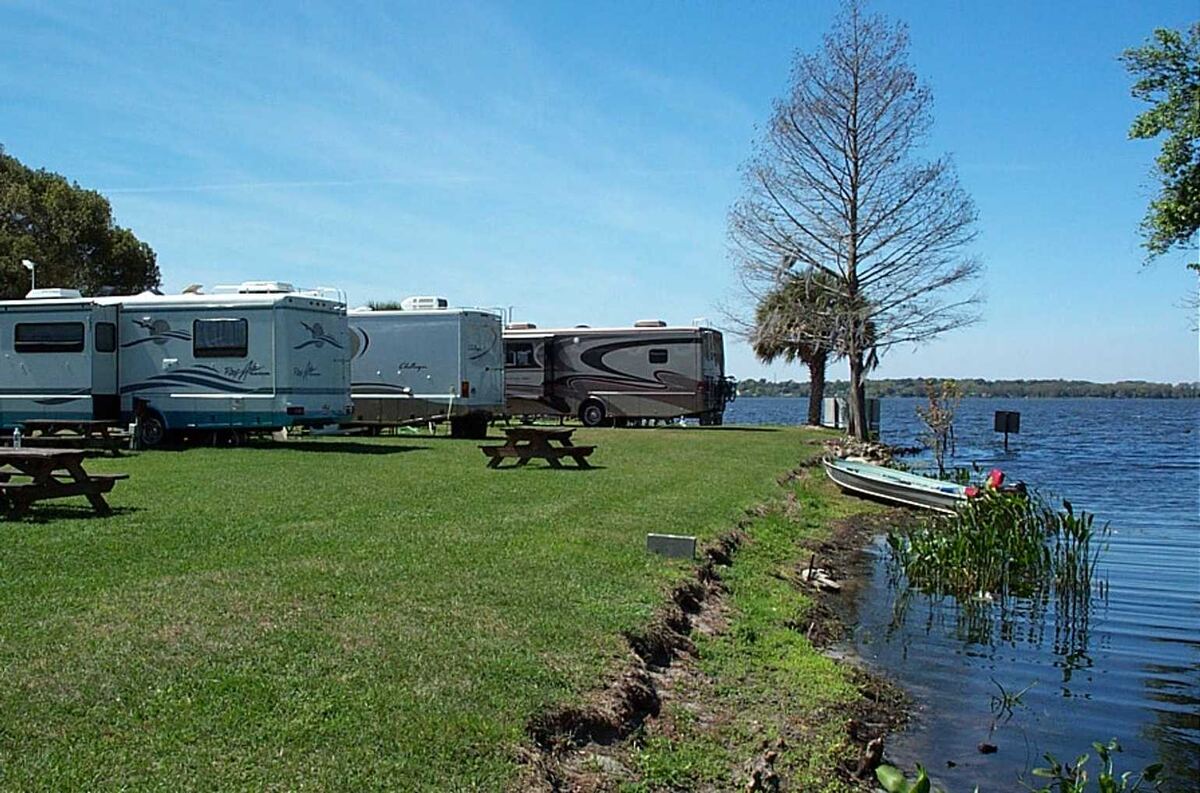
Guests considering a stay should review the park’s current waterfront amenities, the Lake Harris boating and fishing guide, and short-term RV-site information. Confirm the exact site, water relationship, boat eligibility, slip status, trailer arrangements, and fishing access with park staff. Do not infer access from a lakefront photo alone.
Lake Harris fish questions
What are the most popular fish in Lake Harris?
FWC highlights Florida bass, black crappie, bluegill, redear sunfish, sunshine bass, and channel catfish among the Harris Chain’s popular sport fish.
Is this a current Lake Harris fishing report?
No. It is an evergreen species guide. Use FWC’s current Harris Chain page for changing fishery and management information.
Does Hide-A-Way Harbor guarantee fishing access from an RV site?
No such assumption should be made. Review the exact site and current approved amenities, then ask staff about access and boat-related terms before booking.
Official sources and verification
Species and management information checked August 31, 2026. Regulations and conditions can change.
- Florida Fish and Wildlife Conservation Commission: Harris Chain of Lakes
- Florida Fish and Wildlife Conservation Commission: black crappie research
- Florida Fish and Wildlife Conservation Commission: freshwater regulations
- Florida Fish and Wildlife Conservation Commission: freshwater license information
- Florida Fish and Wildlife Conservation Commission: 2026 Lake Harris habitat-restoration notice