Mobile home, manufactured home, and park model are often used as if they mean the same thing. Federal and Florida sources treat them differently. The label affects construction standards, intended use, installation, titling, financing, insurance, and whether a particular community can accept the unit.
Important: This is a general educational comparison, not legal, tax, insurance, financing, zoning, or purchase advice. A home’s data plate, certification labels, title documents, construction standard, local approvals, and community rules control, not the name used in an advertisement.
The short version
| Term | General official meaning | Primary design intent | What to verify |
|---|---|---|---|
| Mobile home | In common federal housing usage, a factory-built home produced before the federal HUD Code took effect on June 15, 1976. Florida statutes also use the term in defined legal contexts. | Residential dwelling | Build date, title, existing installation, condition, applicable Florida definition, local approval, and community acceptance. |
| Manufactured home | A factory-built dwelling constructed to the federal Manufactured Home Construction and Safety Standards, identified by HUD certification labels on transportable sections. | Residential dwelling | HUD labels and data plate, installation, title, lot terms, utilities, age, dimensions, financing, insurance, and local approval. |
| Park model or park trailer | Florida classifies a park trailer as a recreational vehicle-type unit designed for seasonal or temporary living quarters, subject to size and construction-standard definitions. | Seasonal or temporary living quarters under the cited Florida definition | Unit standard, title/MSO, dimensions, intended use, installation, local permits, community acceptance, financing, insurance, and occupancy rules. |
What is a manufactured home?
HUD says a manufactured home is built in a factory to the federal Manufactured Home Construction and Safety Standards, often called the HUD Code. The home is transported in one or more sections on a permanent chassis. Each transportable section produced after June 15, 1976 must have a red exterior certification label showing that the manufacturer certified compliance with the federal standards.
The HUD standards address areas such as the body and frame, thermal protection, plumbing, electrical systems, and fire safety. A manufactured home is not identified by appearance alone. A porch, roof form, siding style, or foundation treatment does not replace the certification label and data plate.
Manufactured home questions to ask
- What is the exact manufacture date, manufacturer, model, serial number, and section count?
- Are the HUD certification labels present on every transportable section?
- Is the data plate available inside the home?
- Who will transport, install, inspect, and connect the home?
- What wind, foundation, flood, utility, setback, and permitting requirements apply at the site?
- Will the community accept this exact home, age, size, condition, and installation plan?
- What title, tax, financing, insurance, and lot-lease documents will be required?
What does mobile home mean?
In current HUD educational materials, mobile home generally refers to a factory-built home produced before June 15, 1976, when the federal construction and safety standards took effect. Homes built to the federal standards after that date are manufactured homes.
Everyday speech does not always follow that distinction. People may call a newer manufactured home a mobile home, and names of communities or legal documents may retain older terminology. Florida statutes also define mobile home for particular regulatory purposes. That is why buyers, sellers, and communities should use the unit’s records rather than a casual label.
What is a park model?
Florida law uses the term park trailer. It defines a park trailer as a transportable unit on a single chassis, no more than 14 feet in body width, designed to provide seasonal or temporary living quarters when connected to necessary utilities. The statute sets a maximum setup area of 400 square feet for units built to ANSI A-119.5 standards and 500 square feet for units constructed to the cited HUD park-trailer standard.
FLHSMV guidance says park trailers are considered recreational vehicles in Florida and that the manufacturer’s statement of origin should identify the body type as park trailer. A park model can look like a small cottage, but appearance does not turn it into a manufactured home.
Park model questions to ask
- Which construction standard is shown on the unit and its documents?
- How is the unit titled and registered?
- What is the exact exterior size and setup area?
- Does the local jurisdiction permit the proposed placement and use?
- Does the community accept that unit type for the intended occupancy?
- Who is responsible for transport, installation, tie-downs, utilities, permits, steps, decks, skirting, and inspections?
- Do financing and insurance providers classify the unit the same way the seller does?
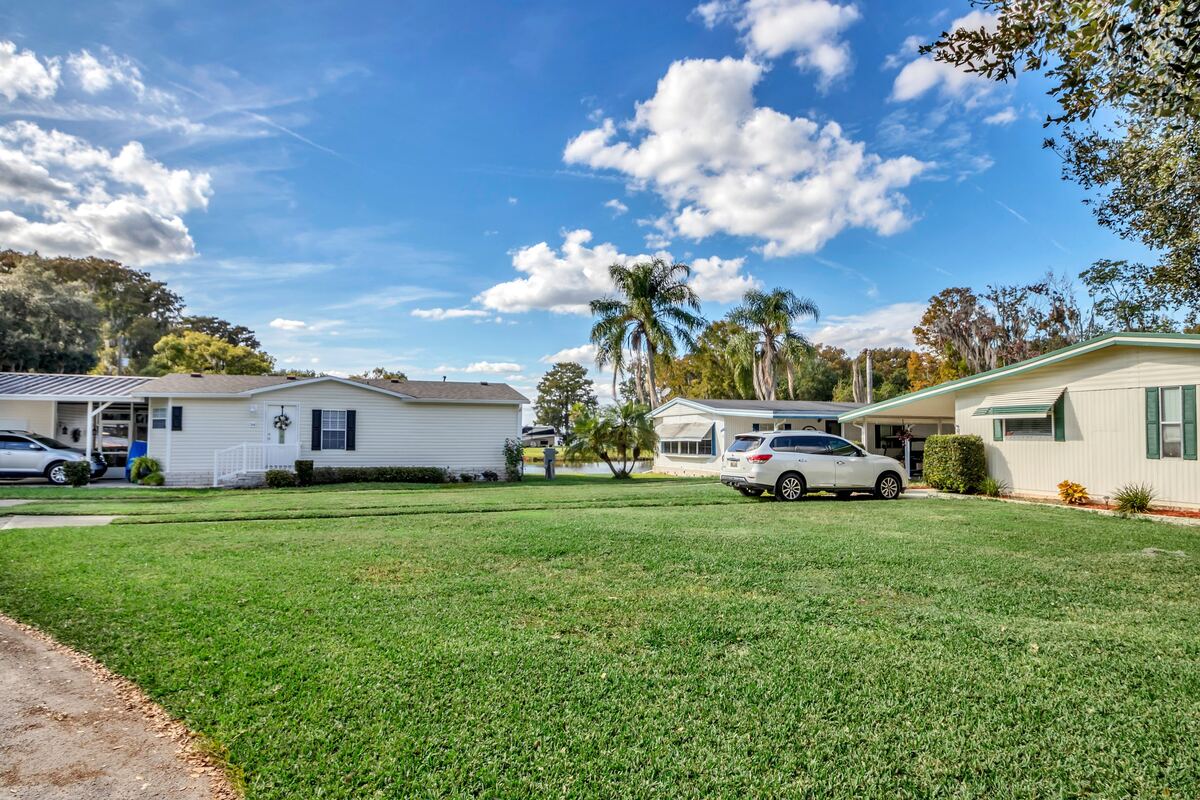
Why the distinction matters
Construction and certification
Manufactured homes use the federal HUD Code and certification-label system. Park trailers follow the standards recognized for that unit type in Florida law. A pre-1976 mobile home may not have HUD certification because it predates the federal program.
Intended use
A manufactured home is designed as a dwelling. Florida’s park-trailer definition describes seasonal or temporary living quarters. A seller’s phrase such as tiny home, cottage, cabin, or full-time park model does not override the legal classification or local occupancy rules.
Installation and site approval
Florida has installation standards for mobile homes, manufactured homes, and park trailers. Local land-use, flood, setback, utility, permitting, and community requirements can add separate gates. A unit being transportable does not mean it can be placed on any open lot.
Title, tax, insurance, and financing
These issues can depend on unit classification, ownership of the land, permanent attachment, age, condition, lender rules, insurer rules, and state records. Obtain written answers from the relevant agency and providers before signing a purchase or site agreement.
How to evaluate a home for a leased site
- Identify the unit. Collect the build date, title, certification labels, data plate, manufacturer information, dimensions, and photos.
- Ask the community first. Get written confirmation that the exact type, size, age, and condition can be considered before paying for transport or site work.
- Check the jurisdiction. Verify zoning, permitting, installation, flood, utility, and inspection requirements with the responsible government offices.
- Price the complete project. Include purchase, tax, transport, setup, foundation or tie-down work, utility connections, permits, steps, skirting, insurance, financing, lot rent, and ongoing maintenance.
- Read every agreement. Home purchase and lot leasing are separate obligations. Confirm what happens if placement, financing, insurance, or installation approval fails.
- Use qualified professionals. Rely on properly licensed dealers, installers, transporters, inspectors, lenders, insurers, and advisers for their areas of responsibility.
Home-site planning at Hide-A-Way Harbor
Hide-A-Way Harbor’s 55+ manufactured-home sites page is the owner page for current lot inquiries. Use it to learn the approved inquiry process and ask staff what documentation is needed for a proposed home.
The separate park model homes interest page does not promise a home for sale, a model, a price, a dealer relationship, or current inventory. Do not make a purchase decision until the community, jurisdiction, installer, insurer, lender, and seller have answered the questions that apply to your exact unit and plan.
Home-type comparison questions
Is every factory-built home a manufactured home?
No. Manufactured homes are one type of factory-built housing. Modular homes are also factory-built but use applicable state and local building codes rather than the federal HUD Code. Park models have a different classification and intended use under Florida law.
Can I tell the type from a photo?
Not reliably. Review the certification labels, data plate, title or manufacturer’s statement of origin, build date, and applicable standard.
Does Hide-A-Way Harbor currently sell park models?
This article does not make that claim. Use the current site pages and contact staff for approved information about lots, interest lists, or any future home opportunity.
Official sources and verification
Definitions and agency guidance checked August 31, 2026. Laws and program guidance can change.
- U.S. Department of Housing and Urban Development: manufactured housing homeowner resources
- HUD Housing Counselors: manufactured, mobile, and modular home definitions
- Florida Statutes section 320.01: vehicle, park trailer, mobile home, and manufactured home definitions
- Florida Highway Safety and Motor Vehicles: dealer handbook and park-trailer guidance
- Florida Statutes section 320.8325: installation standards